Encoding System
The encoding system converts room geometry and parameters into 128×128 pixel images. Each pixel's RGBA channels encode specific geometric, radiometric, or contextual information. Neural networks process these images to predict daylight distribution.
How the image is built
Resolution - 128×128 pixels at base scale. Each pixel represents 0.1 m (10 cm). Total area: 12.8 m × 12.8 m.
Reference Point - Window center, aligned with outer plane of facade wall. Positioned 12 pixels from right edge, vertically centered.
Coordinate System - Window normal vector points toward right image edge. X-axis (along facade) maps to vertical in image. Y-axis (into room) maps to horizontal in image, reversed (deeper = leftward). Z-axis (height) encoded in channel values.
Image Regions
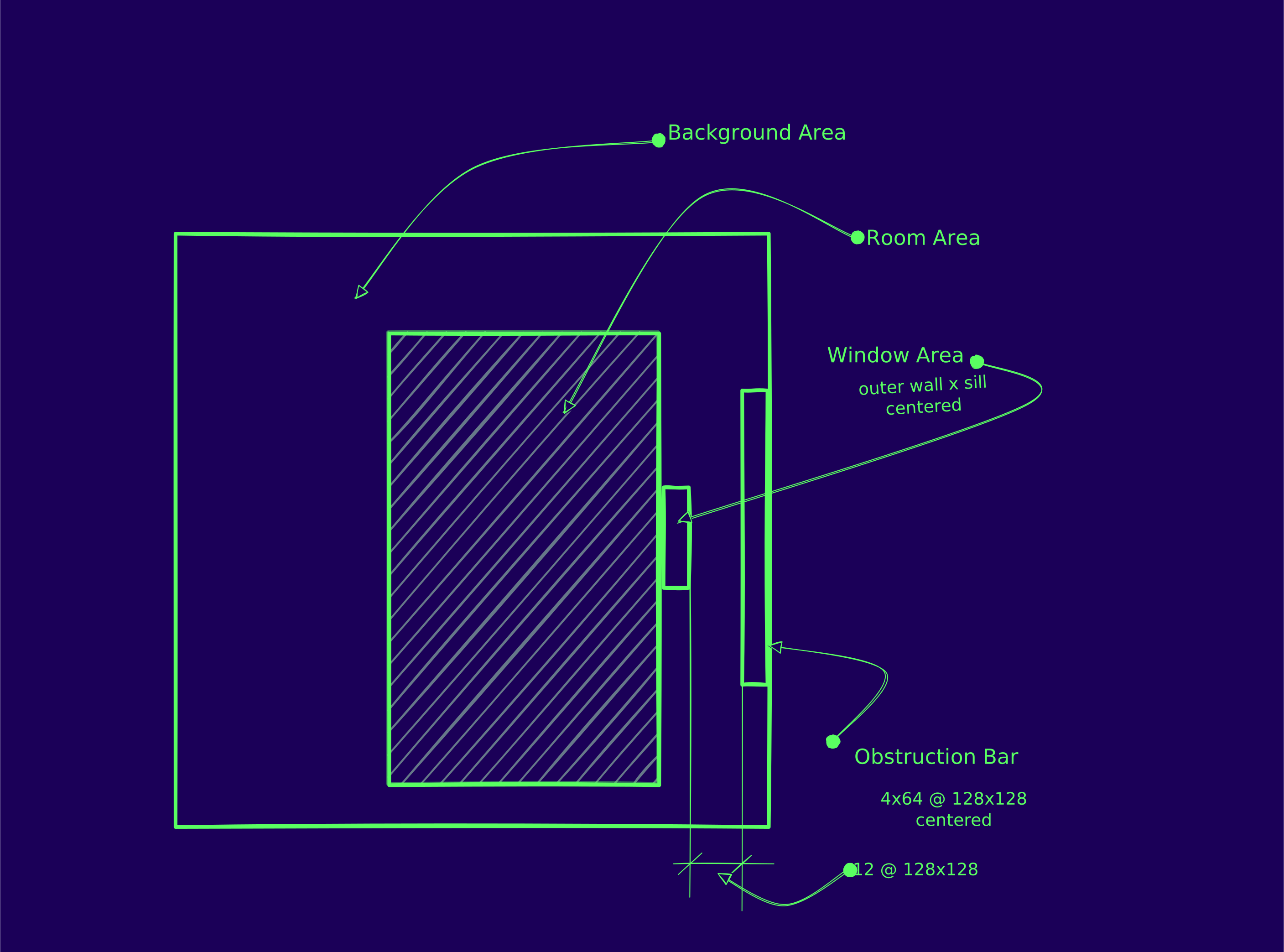
Regions drawn in order (later regions overwrite earlier):
-
Background - Fills entire image. Encodes floor height, facade reflectance, terrain reflectance, window orientation (DA modes).
-
Room Polygon - Interior space mask. Encodes ceiling height, floor/wall/ceiling reflectances. Clipped to prevent overlap with boundaries.
-
Window - Vertical bar at fixed position (12 pixels from right edge). Encodes sill height, frame ratio, window height, frame reflectance.
-
Obstruction Bar - 4×64 pixel bar at right edge. Each row represents a horizontal azimuth angle (±72.5° from facade normal). Encodes obstruction angles (horizon and zenith), context reflectance, balcony reflectance.
Boundary Rules
C-Frame Border - Outermost 2 pixel rows/columns must remain background. Ensures background parameters always visible. Critical for model training (avoids edge artifacts).
Room Clipping - Room polygon clipped at x=121 (at 128×128 scale). Creates 2-pixel gap before obstruction bar (starts at x=124). Uses Shapely geometric operations for precision.
Large and L-Shaped Rooms
Rooms exceeding 10 m width/length or L-shaped rooms with windows on internal corners require clipping. Room area clipped 2 pixels from image border at standard scale (128×128, scaling is linear). For L-shaped rooms, clipping occurs 2 pixels from obstruction bar area.
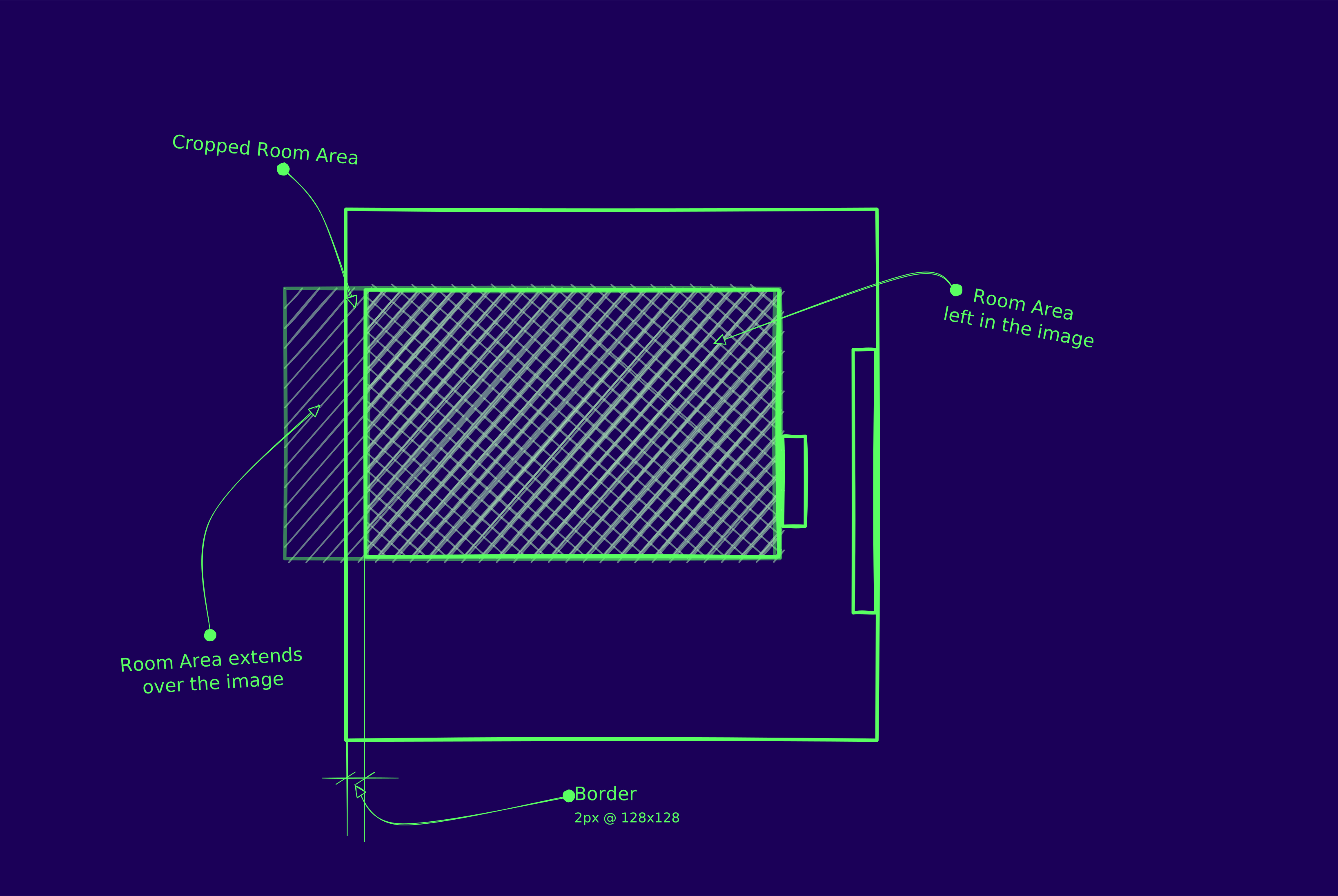
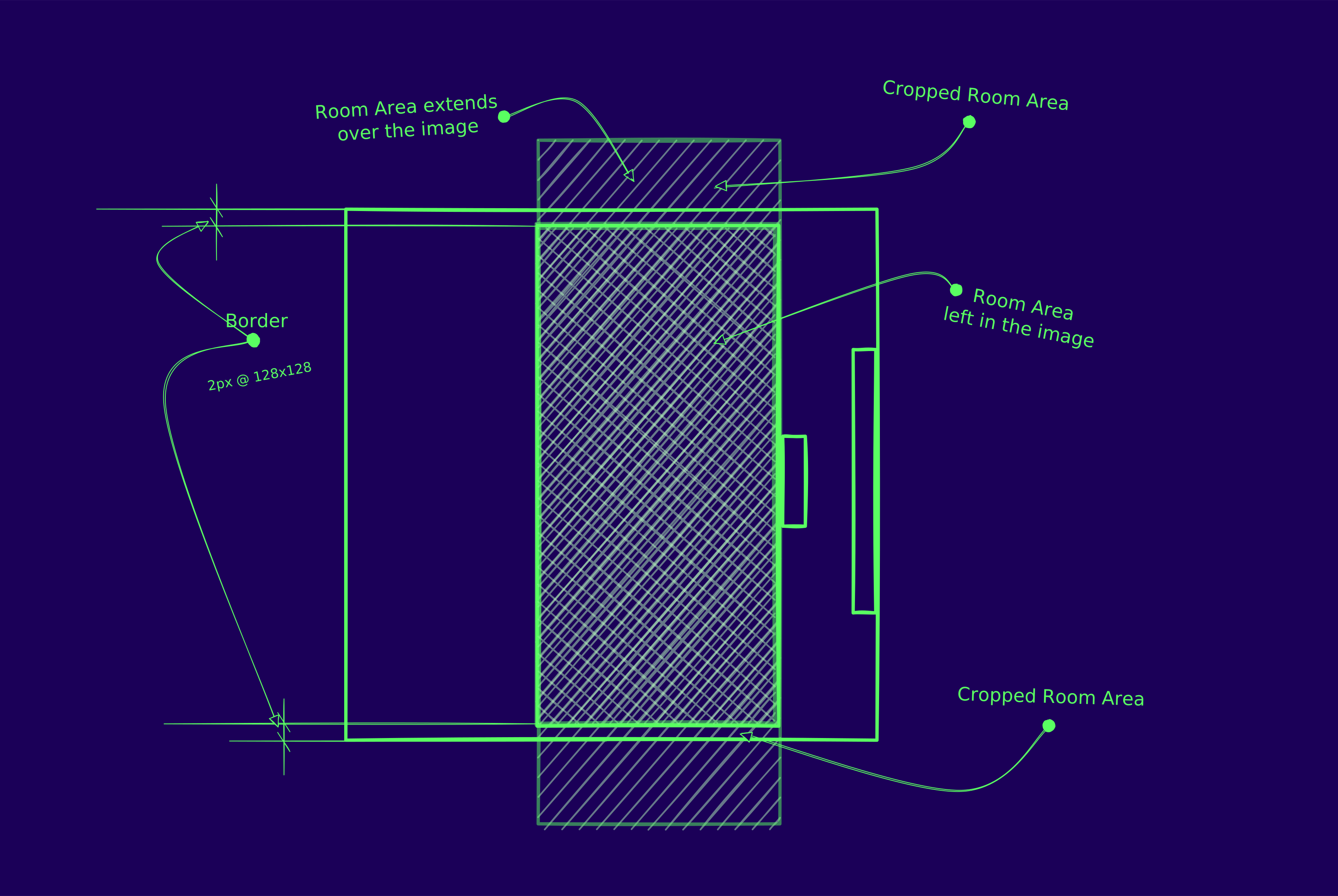
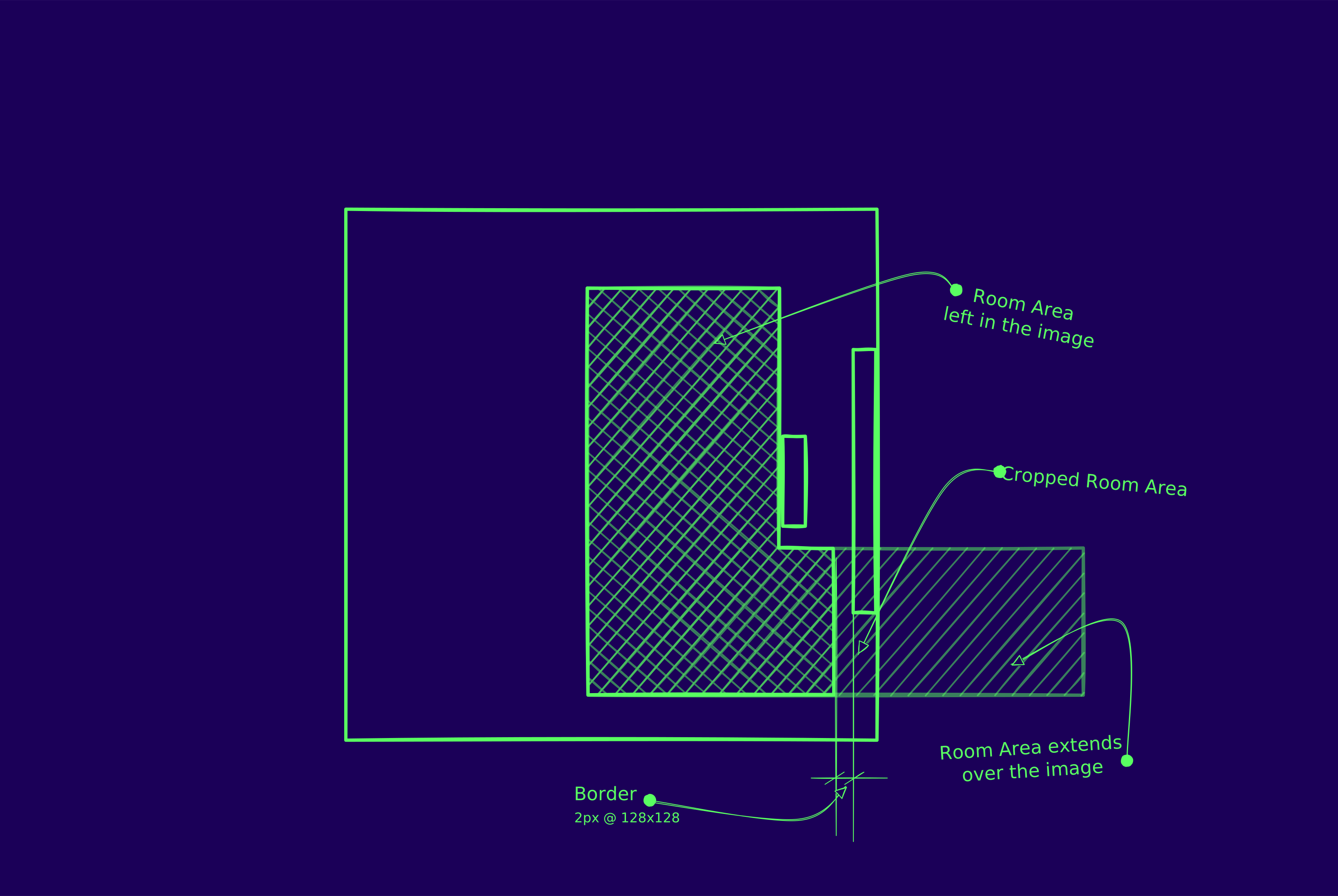
Clipped areas receive negligible daylight and do not significantly affect predictions.
Channel Encoding
Each region's pixels encode parameters via RGBA channels. Encoding varies by model type.
Encoded Parameters by Region
Background Region
| Parameter | Channel | Range | Used In |
|---|---|---|---|
| Terrain reflectance | Red | 0-1 | Custom modes |
| Floor height above terrain | Green | 0-10 m | All models |
| Facade reflectance | Blue | 0-1 | Custom modes |
| Window orientation | Alpha | 0-360° | DA modes |
Room Region
| Parameter | Channel | Range | Used In |
|---|---|---|---|
| Vertical reflectance (walls) | Red | 0-1 | Custom modes |
| Horizontal reflectance (floor) | Green | 0-1 | Custom modes |
| Height roof over floor | Blue | 0-30 m | All models |
| Ceiling reflectance | Alpha | 0.5-1 | Custom modes |
Window Region
| Parameter | Channel | Range | Used In |
|---|---|---|---|
| Sill height | Red | 0-5 m | All models |
| Frame ratio | Green | 0-1 (reversed) | All models |
| Window height | Blue | 0.2-5 m (reversed) | All models |
| Frame reflectance | Alpha | 0-1 | Custom modes |
Obstruction Bar Region
| Parameter | Channel | Range | Used In |
|---|---|---|---|
| Obstruction angle zenith | Red | 0-70° | All models |
| Context reflectance | Green | 0.1-0.6 | Custom modes |
| Obstruction angle horizon | Blue | 0-90° | All models |
| Balcony reflectance | Alpha | 0-1 | Custom modes |
Normalization - Input values scaled from parameter range to [0, 1], then multiplied by 255 to match pixel intensity range.
Reversed Parameters - Frame ratio and window height use inverted encoding: normalized = 1.0 - ((input - min) / (max - min)).
Multi-Window Support
Rooms with windows on different facades get one encoded image per window. Room polygon and window coordinates rotated so each window faces right (toward image edge).
Rotation angles
- South facade (0°): No rotation
- West facade (90°): Rotate -270°
- North facade (180°): Rotate -180°
- East facade (270°): Rotate -90°
Daylight distributions from each window summed during post-processing to obtain total DF/DA for full room.
Scaling Behavior
All dimensions scale proportionally with image size:
scale = image_size / 128.0
resolution = 0.1 / scale  # meters per pixel
Examples
- 128×128: 1 pixel = 0.10 m
- 256×256: 1 pixel = 0.05 m
- 512×512: 1 pixel = 0.025 m
- 1024×1024: 1 pixel = 0.0125 m
Pixel dimensions (window offset, wall thickness, obstruction bar width, border width) scale by multiplying base dimensions by scale factor.
Integration with LUX
The public LUX API exposes the encoder at /encode endpoint. Users send room parameters via JSON. Encoder returns PNG images. These images feed into daylight prediction models (DF/DA) to generate daylight distributions.
Complete encoding logic: encoding_logic
API specification: Code Section